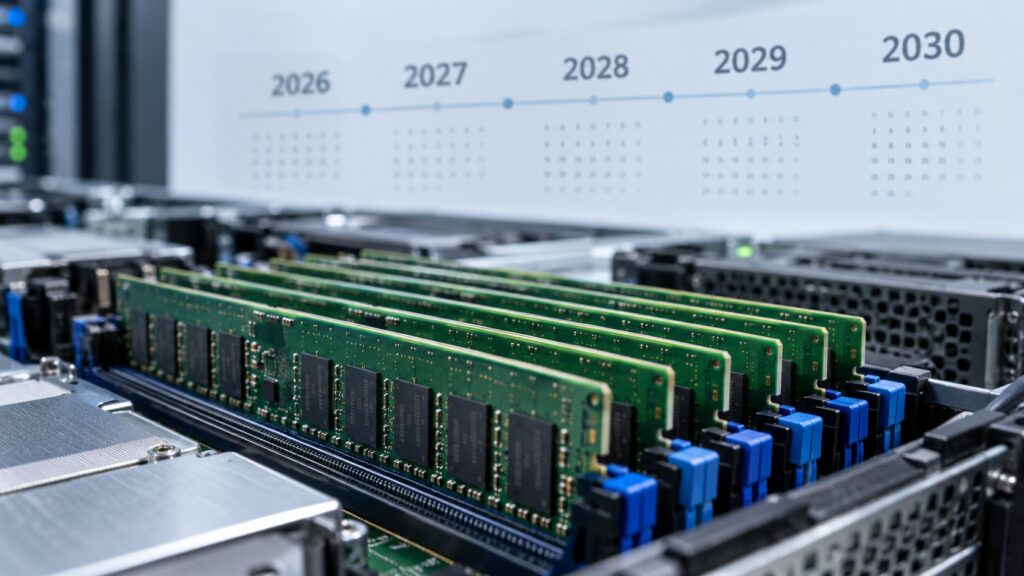
The current memory shortage is not simply a matter of semiconductor manufacturers producing too little DRAM. The bigger issue is that demand is changing at the same time that memory production is being redirected toward higher-priority applications, particularly AI infrastructure.
AI servers require enormous amounts of memory, including conventional server DRAM as well as high-bandwidth memory (HBM). As cloud providers and data centers continue expanding AI infrastructure, memory manufacturers have strong incentives to allocate production capacity toward these products. This can put additional pressure on the supply of conventional DRAM used in servers, workstations, and other systems.
Another reason the shortage may take time to resolve is the long investment cycle of semiconductor manufacturing. Building and qualifying new fabrication capacity is not something manufacturers can accomplish quickly when prices rise. Even when companies announce major investments, the resulting capacity may take years to become commercially meaningful. As a result, additional supply may arrive gradually rather than creating an immediate reversal in market conditions.
Demand is also an important part of the equation. If AI infrastructure continues expanding rapidly, new memory production could be absorbed by growing demand rather than creating a large surplus. This is why simply pointing to new fabs and assuming that memory prices will quickly return to previous levels can be misleading.
For buyers and sellers of used hardware, this situation has another important implication. Tight supply in the new-memory market can increase interest in existing inventory, particularly enterprise and server modules that remain compatible with deployed systems. Businesses upgrading data centers may therefore have opportunities to recover value from surplus inventory instead of leaving unused memory in storage.
Companies holding excess modules can consider whether now is an appropriate time to sell memory, particularly when the hardware is still in demand and properly identified. The value of used memory will not necessarily move in exactly the same direction as new DRAM prices, but broader supply-and-demand conditions can influence the secondary market.
The important point is that there may not be a single date when the “memory shortage” suddenly ends. Supply, AI demand, HBM production, conventional DRAM requirements, and new manufacturing capacity will continue interacting with one another. The market could gradually become less constrained rather than switching overnight from shortage to surplus.
This article focuses specifically on why the memory shortage could persist and what factors may ultimately bring it to an end. For a broader comparison of the industry's expectations, including forecasts from different companies, analysts, and market sources, see the original article: When Will the Memory Shortage End?.